
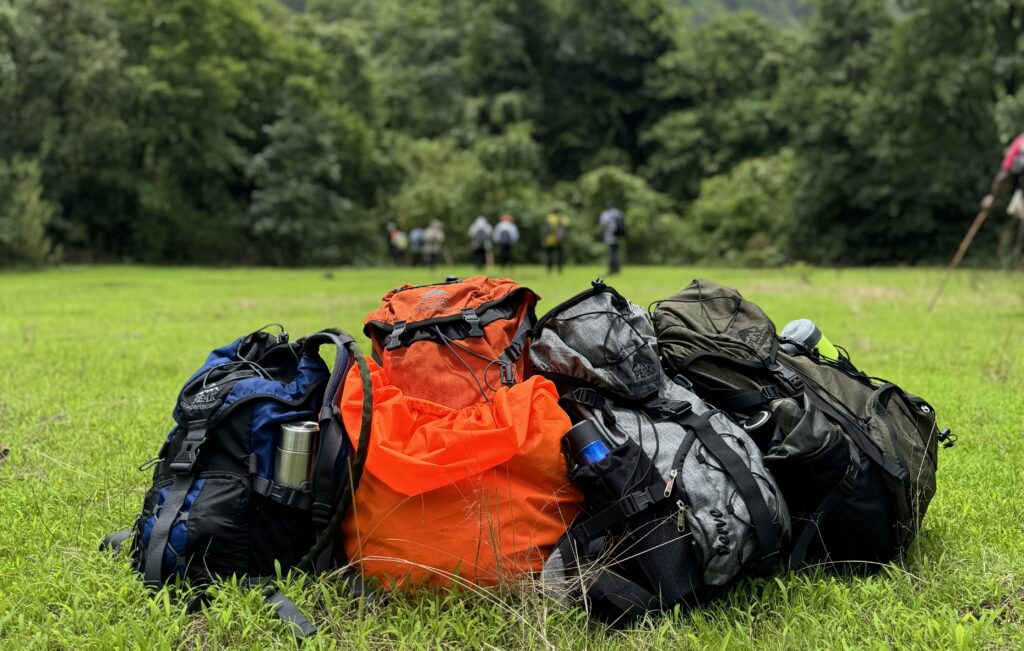
The capacity you require is dependent on a number of factors such as:
- The Intended Activity
- Duration of the Trek
- Season and Location
- Personal requirement
- THE INTENDED ACTIVITY
Mountaineering/Expedition -vol.(50-75 lts)
Trekking& Backpacking -vol.(30-60lt.)
Day Trips -vol.(15-40lt.)
Travelling and Trekking -vol.(50- 60 lts) - DURATION OF THE TREK
- Depending on the duration, it is important to choose the most appropriate trekking bag. It is always advisable to have some extra capacity, instead of overstuffing the sack.
- For Daytrips and overnights, a sack of 30lt. or less would be ideal.
- For Weekend Trips or 2-3 days’ treks, a 30-50lt. pack would be appropriate.
- Larger Sacks with capacity of 60+lt. are used for Himalayan Treks and Expeditions or for carrying bulky equipments.
- SEASON AND LOCATION
- The bulk and amount of clothes that a trekker carries would vary seasonally.
- In Summers, clothes carried for a trek are fewer and lighter.
- In Winter, there would be more woollies adding to the bulk, thus requiring a bigger backpack.
- For Himalayan Treks, the requirement of warm clothes and accessories is more than that of the Sahyadris.
- PERSONAL REQUIREMENT
- The volume and type of rucksack each person requires is subjective to needs,
preferences and activity of the person. - If you are carrying rations and consumables for the entire duration of your trek,
you may require a sack with a bigger volume. - If you are only carrying clothes, a medium capacity backpack would suffice.
- If you are going for a technical climb and are carrying ropes and hardware, you will require a much bigger sack.
- However, if you see yourself as an Ultralight carrier who carries the bare
minimum, you can make do with a smaller sack.
- The volume and type of rucksack each person requires is subjective to needs,